Solar Inverters: The Definitive Guide to String, Hybrid & Microinverter Technology
Often called the 'brain' of a solar system, the inverter does much more than convert DC to AC. Discover the engineering nuances of modern inverter architecture and why selecting the right technology for the Axarquía's unique climate is the key to a 25-year ROI.
When homeowners in the Axarquía—from the white-washed streets of Competa to the coastal villas of Nerja—invest in solar energy, they often focus exclusively on the solar panels. While the panels are the 'muscles' that capture energy, the inverter is the 'brain' and the 'heart.' It is the most complex piece of electronics in your home, responsible for converting direct current (DC) from the sun into the alternating current (AC) that powers your appliances, all while synchronizing perfectly with the Spanish electrical grid (Endesa/e-distribución).
In this technical deep dive, we explore why inverter technology is the single most important factor in your system's stability, efficiency, and long-term profitability. We move beyond sales brochures to look at the physics of electrical conversion, the impact of the Andalusian heat, and the emerging technologies like V2H (Vehicle-to-Home) that are turning Spanish villas into self-sustaining power plants.
1. Inverter Architectures: The Three Main Paths
There is no 'best' inverter, only the best inverter for your specific roof and consumption profile. Modern solar engineering has diverged into three primary architectures, each with its own niche in the Axarquía market. Understanding these is the first step in avoiding a costly mismatch between your hardware and your home's needs.
A. String Inverters: The Reliable Workhorse
String inverters have been the industry standard for decades. In this setup, your panels are connected in a 'string' (series), and the combined high-voltage DC electricity is sent to a single central inverter, usually mounted in a garage or utility room. Brands like Huawei, Solis, and Fronius dominate this category.
- Pros: Most cost-effective, easy to maintain (one central point of failure), high efficiency (>98%).
- Cons: The 'Christmas Light' effect—if one panel is shaded by a chimney or calima dust, the production of the entire string can drop. It requires large, unshaded roof areas for peak performance.
B. Microinverters: Precision in the Village
For the complex, varied roofs of Frigiliana or Competa, where shadows from neighbors or ancient chimneys are common, microinverters (like those from Enphase) are the gold standard. Instead of one central unit, a tiny inverter is mounted behind each panel. Each panel operates independently, meaning a shadow on panel #1 doesn't affect panel #10.
- Pros: Immune to shading on other panels, maximum safety (no high-voltage DC on the roof), longer warranties (often 25 years).
- Cons: Higher upfront cost (approx. 20-30% more), more components that could theoretically need replacing on the roof.
C. Hybrid Inverters: The Battery-Ready Future
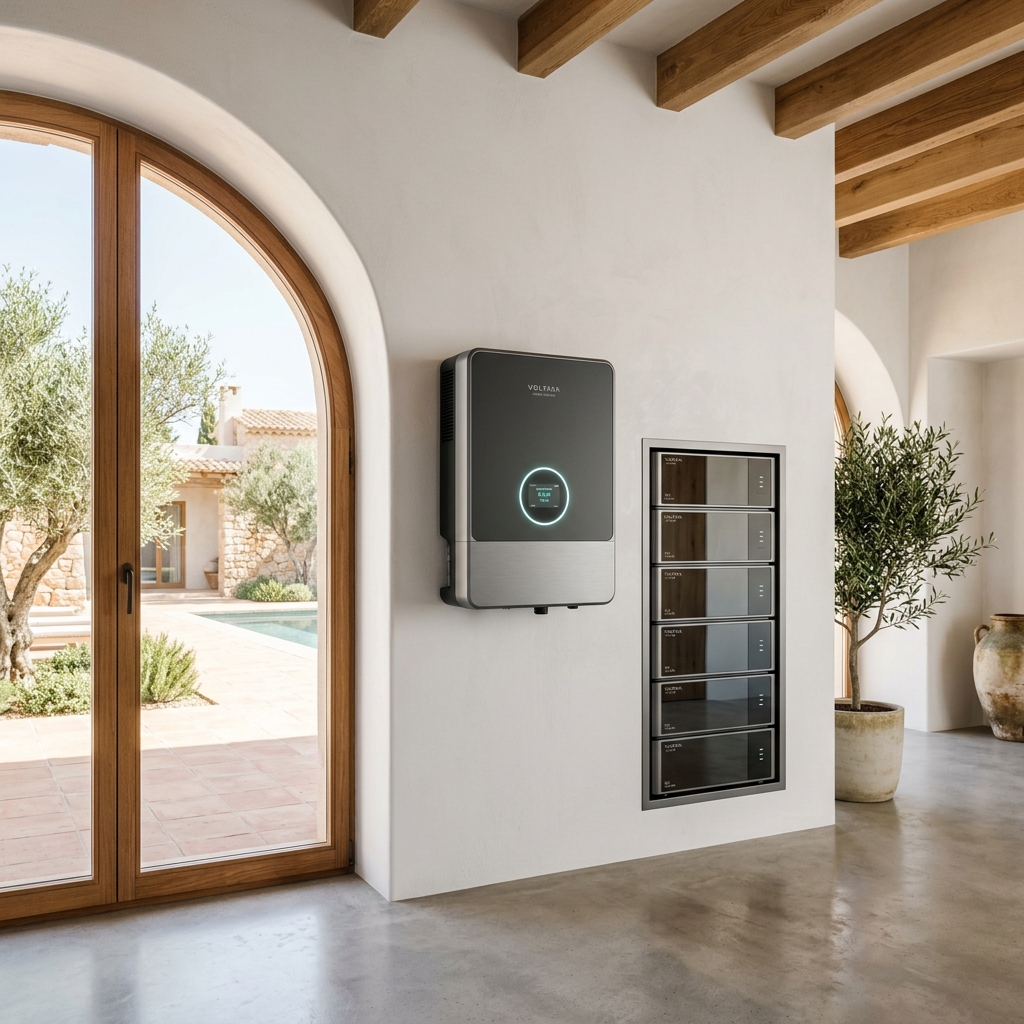
If your goal is Net Zero or blackout protection, a Hybrid Inverter (like Victron Energy, FoxEss, or GoodWe) is mandatory. These units manage three energy flows simultaneously: DC from the panels, DC to/from a battery, and AC for the house/grid. They are the essential gateway to energy independence, allowing you to store the Axarquía's intense midday sun for use during the expensive evening hours.
2. Thermal Management: The Spanish Reality
Critical Engineering Detail
“An inverter is a power electronic device. In the 40°C heat of a Málaga summer, internal component temperatures can reach 80°C. If an inverter isn't engineered for 'Thermal De-rating' management, it will slash its power output to protect itself, losing you money exactly when the sun is strongest.”
At Competa Solar, our installation protocols prioritize thermal health. We never install inverters in direct sun. We use passive cooling heat sinks and, where necessary, active fan-cooled units for high-demand mountain villas. Understanding the 'Temperature Coefficient' of your inverter is just as important as that of your panels; a cooler inverter is a more profitable inverter.
3. The ROI of Efficiency: MPPT and Clipping
Efficiency is measured by more than just the conversion percentage. The MPPT (Maximum Power Point Tracking) algorithm is the software that 'hunts' for the perfect voltage to extract maximum power from the sun. High-end inverters like the Fronius Gen24 use advanced algorithms that can distinguish between a cloud and a dirty panel, adjusting the 'scan' frequency to prevent wasted energy.
We also need to discuss 'Clipping.' Many homeowners worry when they see a 5kW inverter paired with 6kW of panels. This is intentional. Because panels rarely produce their 'Sticker Rating' in the real world (due to heat and dust), oversizing the array (DC/AC ratio) ensures the inverter runs at its peak capacity for more hours of the day, delivering a higher total kWh yield annually than a 'perfectly matched' system would.
4. Grid Stability and 'Campo' Challenges
The electrical grid in rural parts of the Axarquía can be 'soft.' Voltage swings are common at the ends of long rural supply lines. A budget inverter will see a voltage spike (common when neighbors turn off heavy loads) and shut down for 10 minutes as a safety precaution. High-end units have wider tolerance bands and 'reactive power' support that keeps your system online when things get shaky.
For truly remote 'campo' properties, we often deploy Victron Energy hardware. These systems are capable of 'Grid Assist,' meaning they can pull a small amount of power from a weak grid and supplement it with solar/battery power to run large loads like pool heat pumps without tripping the street fuse. It is the ultimate solution for rural luxury living.
5. Monitoring: Knowledge is Power
Modern inverters are IoT (Internet of Things) devices. Through apps like Enphase Enlighten, Huawei FusionSolar, or Victron VRM, you can see your home's energy heartbeat in real-time. This isn't just for show; it is vital for billing verification. We have helped dozens of clients identify errors in their Endesa bills simply by comparing the inverter's export data with the utility company's 'Lectura.' Without an accurate, cloud-monitored inverter, you are essentially flying blind in the complex Spanish energy market.
6. Future-Proofing: V2H and Energy Communities
The inverter you install today should be ready for the world of 2030. Vehicle-to-Home (V2H) technology is arriving, where your Electric Vehicle becomes a massive 70kWh backup battery for your house. Choosing an inverter with high-speed bidirectional capability today saves you from an expensive upgrade in five years. We prioritize hardware with open API protocols and modular expansion capabilities, ensuring your home remains an 'energy gas station' for the next generation of transport.
Conclusion: Choosing Your Path
Whether you opt for the 'set it and forget it' reliability of a Huawei string system, the granular precision of Enphase microinverters, or the off-grid power of a Victron hybrid setup, your choice of inverter will define your solar experience for the next two decades. Don't compromise on the 'brain' of your system. In the Axarquía, where energy independence is within reach, engineering the perfect result is the difference between a simple installation and a true financial asset.
Full Technical Audit
Ready to design the perfect architecture for your Axarquía home? Our engineers use LiDAR and electrical load logging to determine the exact inverter configuration for your roof.
Visit Competa Solar EngineeringFrequently Asked Questions
Ready to apply these insights to your property?
Need a professional audit instead?
“Our guides provide the foundations, but every property in the Axarquía is unique. Our engineers can provide a full technical simulation for your home.”